Skip to the score

AI visibility · United States

The winners won't be the best at what they do. They'll be the first to adapt and optimize.

People are asking their AI instead of searching: 45% of consumers used an AI tool to pick a local business this year, up from 6% the year before.[1]

Synthetic Neurons is an AI visibility and AI receptionist consultancy for local service businesses anywhere in the United States. We make you the business the AI names, starting with a free score that shows what ChatGPT, Gemini and Google's AI say about you today.

Live ask

Asking for plumber near your city.

I live in your city. Which plumber should I call?

    Asked live. Real answer, not a mock-up.

    Scroll

    What the AI reads

    Of 1.9 million citations in local AI answers, two sources carry most of the weight: your Google Business Profile and your own website.[37]

    28.6%

    of local AI citations point to a Google Business Profile[37]

    42%

    point to the business's own website[37]

    2.5–4.1

    businesses named per AI answer where Maps showed a list[45]

    Free · about 30 seconds

    Your AI Visibility Score

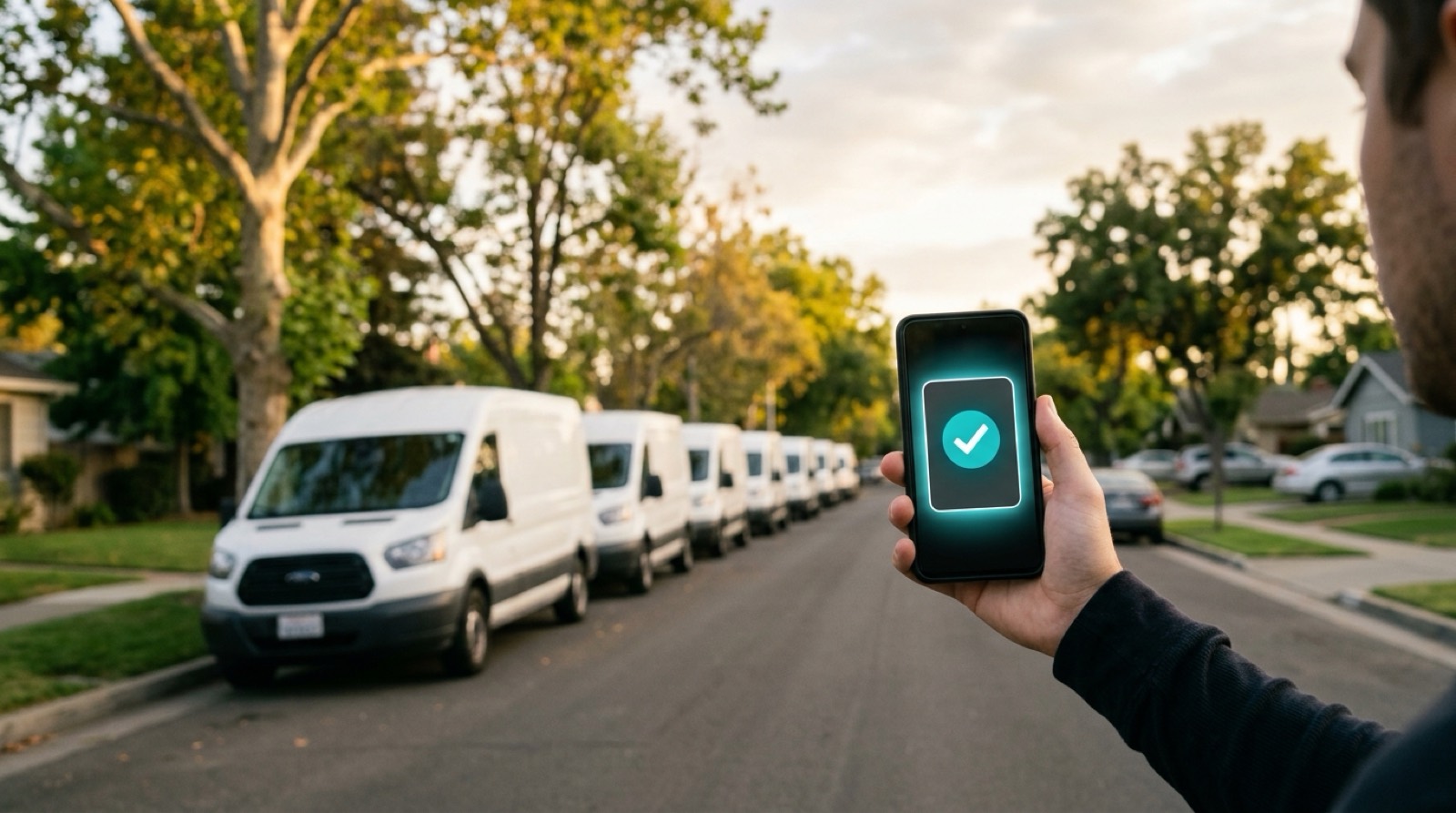
    Enter your domain. We read your site the way an AI does, then ask the engines about you. You get a score from 0 to 100, a grade, the three fixes that matter most, and the answers word for word.

    1. ReadCan the crawlers reach your site, and does the page say who you are and what you do?
    2. AskWe put your business to the engines the way a customer would and keep the answers.
    3. ScoreFive sub-scores, one number, three fixes in priority order.

    Want the fixes done for you? Book a 20-minute call and we will go through your score together.

    Score instrumentReady
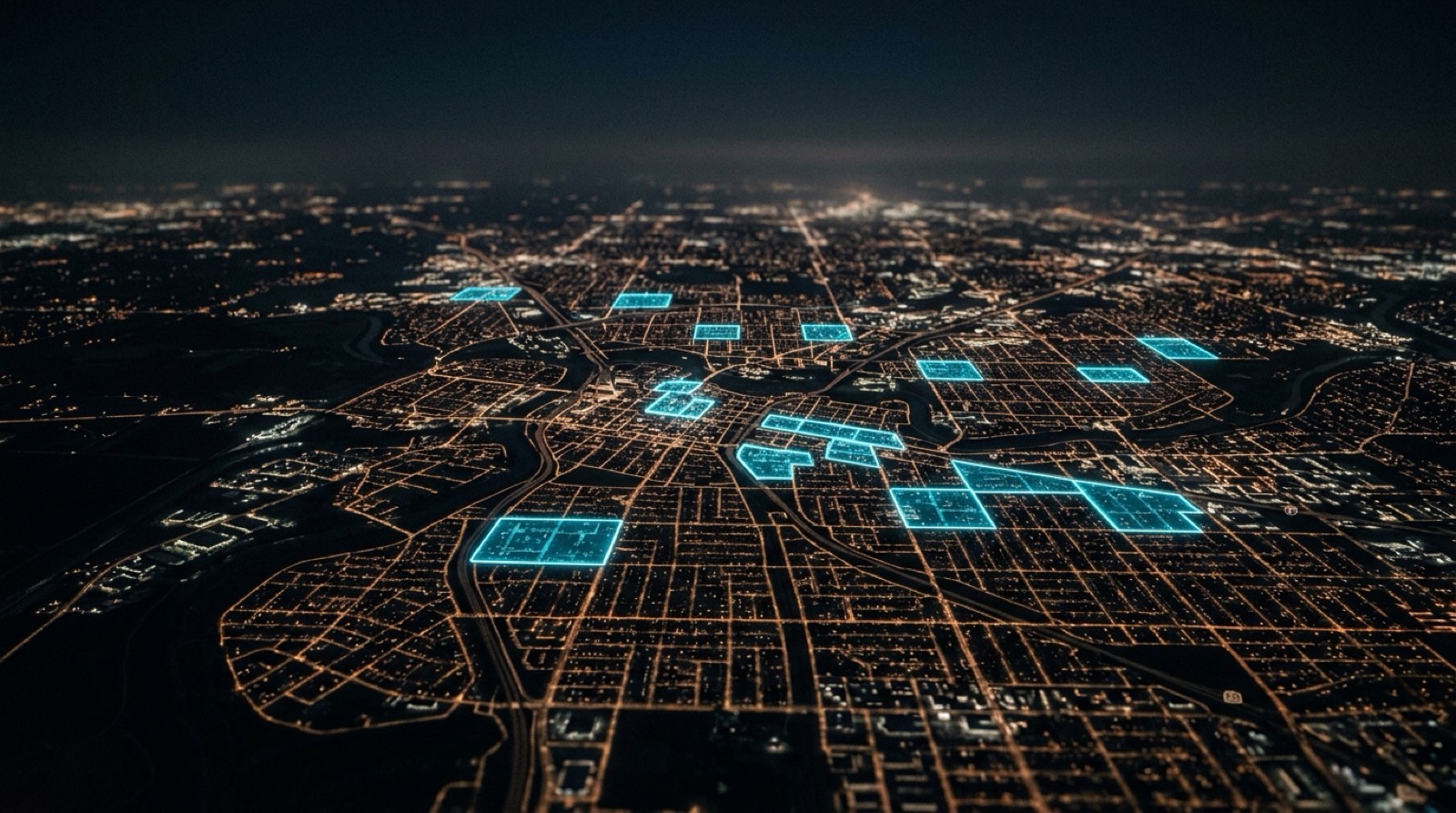
    A city grid at night with a handful of blocks lit in blue: the businesses the AI can see

    Where a map shows ten, the AI names two to four. A business is named in only about a third of AI local answers.[45]

    The lit blocks are the shortlist. Everyone else is dark.

    The pattern

    Six shifts. Same lesson every time.

    Every few years the way customers find a business changes. The businesses that adapt early grow. The household names that wait keep their customers until one year they don't.

    This is not a story about mass extinction. About 1.2 million US establishments close in a normal year,[2] and the closure rate today is about what it was in 2019.[3] Closures are normal. The question is which side of the shortlist you are on. Here is the record, with dates and numbers from the companies' own filings.

    Shift 1 · August 200001

    The internet. Having a website.

    The tipping point: in August 2000 half of American adults were online.[4] A business you could not find on the web had started to disappear for half the country.

    Adapted

    Amazon

    Net sales of $2.76 billion in 2000. $48.1 billion in 2011.[5]

    Waited

    Borders

    Peak sales of $4.06 billion in fiscal 2006, then its first loss.[6] In August 2001 Borders handed borders.com to Amazon and let Amazon be the seller of record.[7] It filed for bankruptcy in February 2011 and liquidated that summer.[8]

    Time from tipping point to the end: about 10 years. To be fair to Borders, mall leases and a collapsing music CD business hurt too. The website handoff is in its own annual report.
    Shift 2 · 200702

    Trusting a transaction online.

    The tipping point: by 2007, two thirds of internet users had bought something online.[9] Online sales were still only about 3% of retail.[10] The behavior flipped a decade before the dollars did, and the companies that read the behavior won.

    Adapted

    Netflix

    4.2 million subscribers in 2005. 20 million in 2010. Revenue went from $682 million to $2.16 billion.[11]

    Waited

    Blockbuster

    $6.05 billion in revenue, 9,094 stores and 84,300 employees in 2004.[12] It filed for bankruptcy on September 23, 2010.[13]

    Time from tipping point to the end: under 4 years. Six years from its own peak. Blockbuster also carried $975 million of debt, and its last annual report names Netflix, Redbox and that debt together.[13]

    Same shift, second name. Toys R Us gave Amazon its website for six years,[14] then spent the next decade paying $400–500M a year in buyout interest. Both are in its filings.[15] Sales sat flat at $13.8 billion in 2007 and $13.9 billion in 2011, and it filed for bankruptcy in September 2017.[15] The debt is the proximate cause. Six years without its own online muscle is the contributing one. We say both.

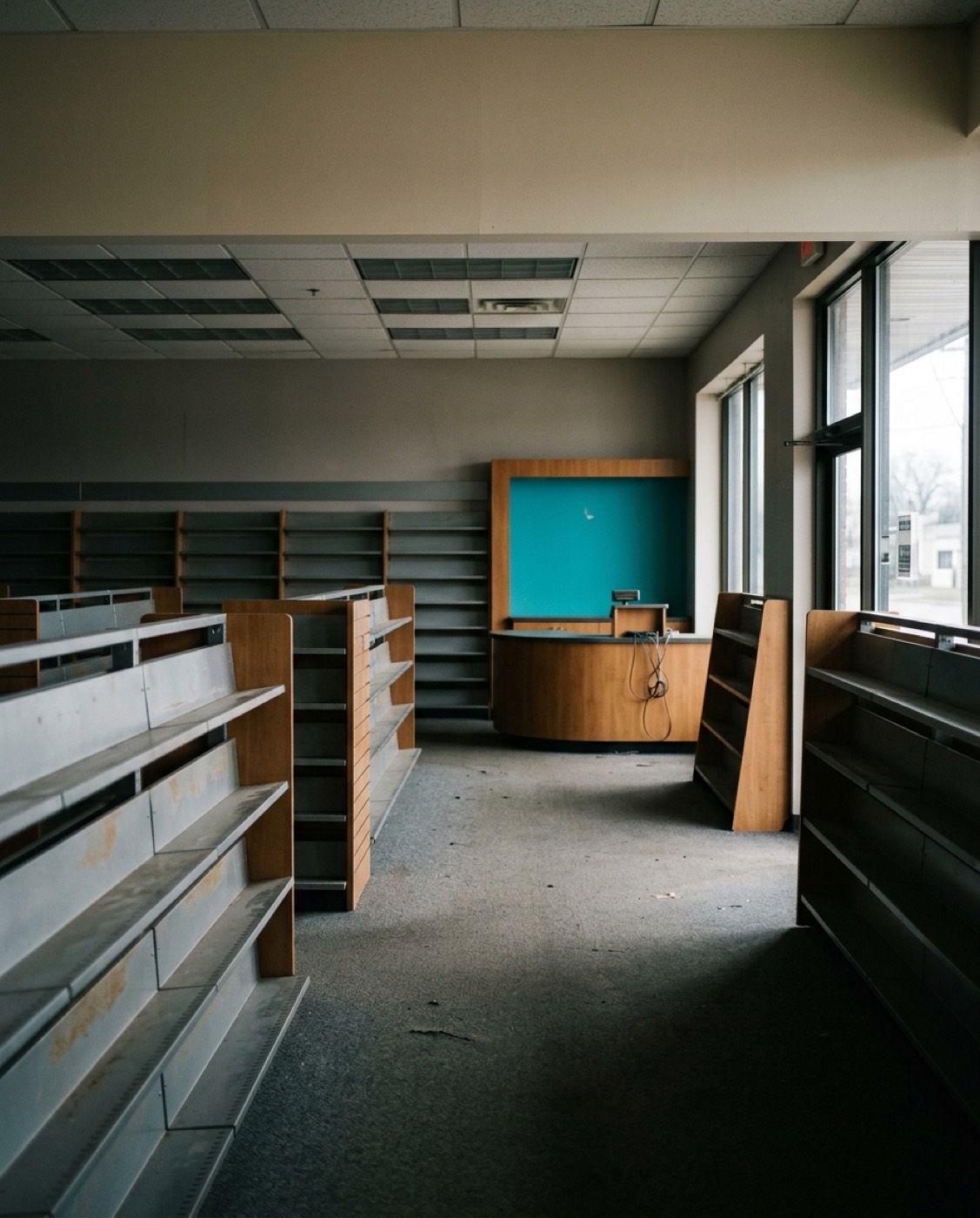
    An empty video rental store: bare shelves, a counter with no one behind it
    Shift 2 · The rental floor, after the shiftIllustrative photograph
    Shift 3 · 200503

    Page one of Google.

    The tipping point: in 2005, daily search use jumped from 30% to 41% of internet users in a single year.[16] By 2011 the internet was the number one place Americans looked for a local business, ahead of newspapers, 47% to 30%.[17]

    Adapted

    The businesses on page one

    The first result gets 27.6% of clicks. All of page two combined gets 0.63%.[18] Page one was the whole game.

    Waited

    The Yellow Pages

    Print directory use had been falling since the early 2000s, and the industry's own filings blame internet search.[19] Idearc, Verizon's directory business, filed for bankruptcy on March 31, 2009 with about $9 billion of debt.[20] R.H. Donnelley followed in May 2009 with $10.2 billion.[21]

    Time from tipping point to the first bankruptcies: about 4 years. Both companies were loaded with buyout debt when the 2008 recession hit. Falling usage was the trend. Leverage was the trigger.

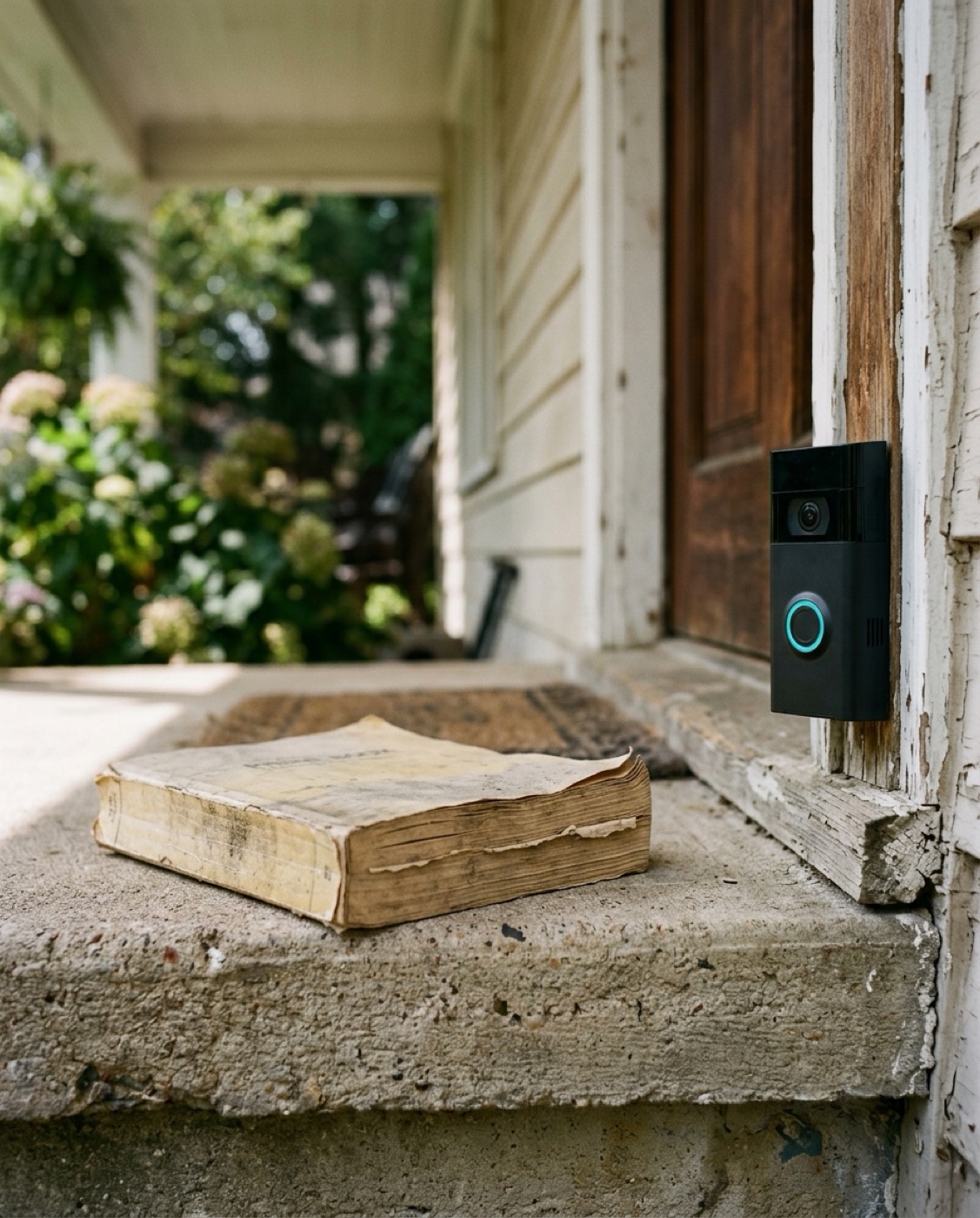
    A worn phone book on a porch step beside a smart doorbell
    Shift 3 · The directory and the doorbellIllustrative photograph
    Shift 4 · May 201504

    Mobile overtakes the desktop.

    The tipping point: on May 5, 2015 Google said more searches now happened on phones than on computers in the US.[22] By late 2016 mobile and tablet traffic passed desktop worldwide, 51.3% to 48.7%.[23]

    Adapted

    Apple

    iPhone sales of $13.0 billion in fiscal 2009. $155.0 billion in fiscal 2015.[24]

    Waited

    Nokia and BlackBerry

    Nokia booked €51.1 billion in revenue in 2007, the year the iPhone launched.[25] On September 3, 2013 it sold its phone business to Microsoft for €5.44 billion.[26] BlackBerry stopped making phones on September 28, 2016.[27]

    Time from the iPhone to Nokia's exit: about 6 years. Nine for BlackBerry. The loss was software and ecosystem, not just screens. Both bet on operating systems the market walked away from.

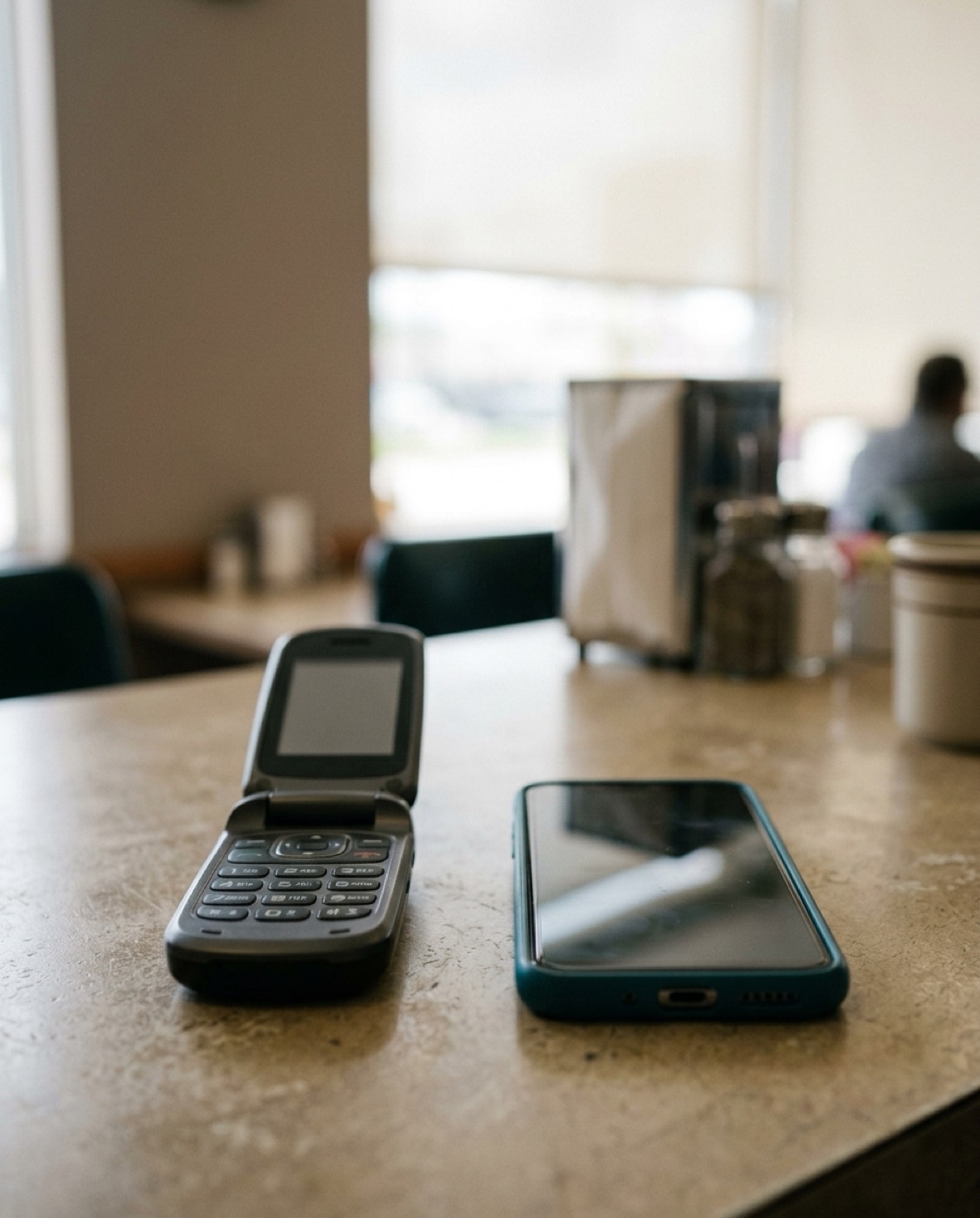
    An open flip phone next to a modern smartphone on a diner counter
    Shift 4 · Two phones, one still in useIllustrative photograph
    Shift 5 · April 201505

    Maps, business profiles and "near me".

    The tipping point: in April 2015 Google reported "near me" searches up 34 times since 2011, 80% of them on phones.[28] In New York, app-based rides passed yellow cabs in 2017.[29]

    Adapted

    Uber

    5.22 billion trips and $49.8 billion in gross bookings in 2018.[30]

    Waited

    New York taxi medallion owners

    A medallion sold for $1 million or more in March 2014. By December 2019 the average sale was $201,796. By December 2021 it was $156,822.[31] Yellow cab trips fell from 503,139 a day in June 2012 to 231,335 in June 2019.[32] Melrose Credit Union, a medallion lender, was seized by regulators in February 2017 and liquidated in August 2018.[33]

    Time from peak to the first lender seized: under 3 years. About 6 years to an 80% loss in value. The city's own medallion auctions and predatory lending made the fall worse. The demand shock was the app.

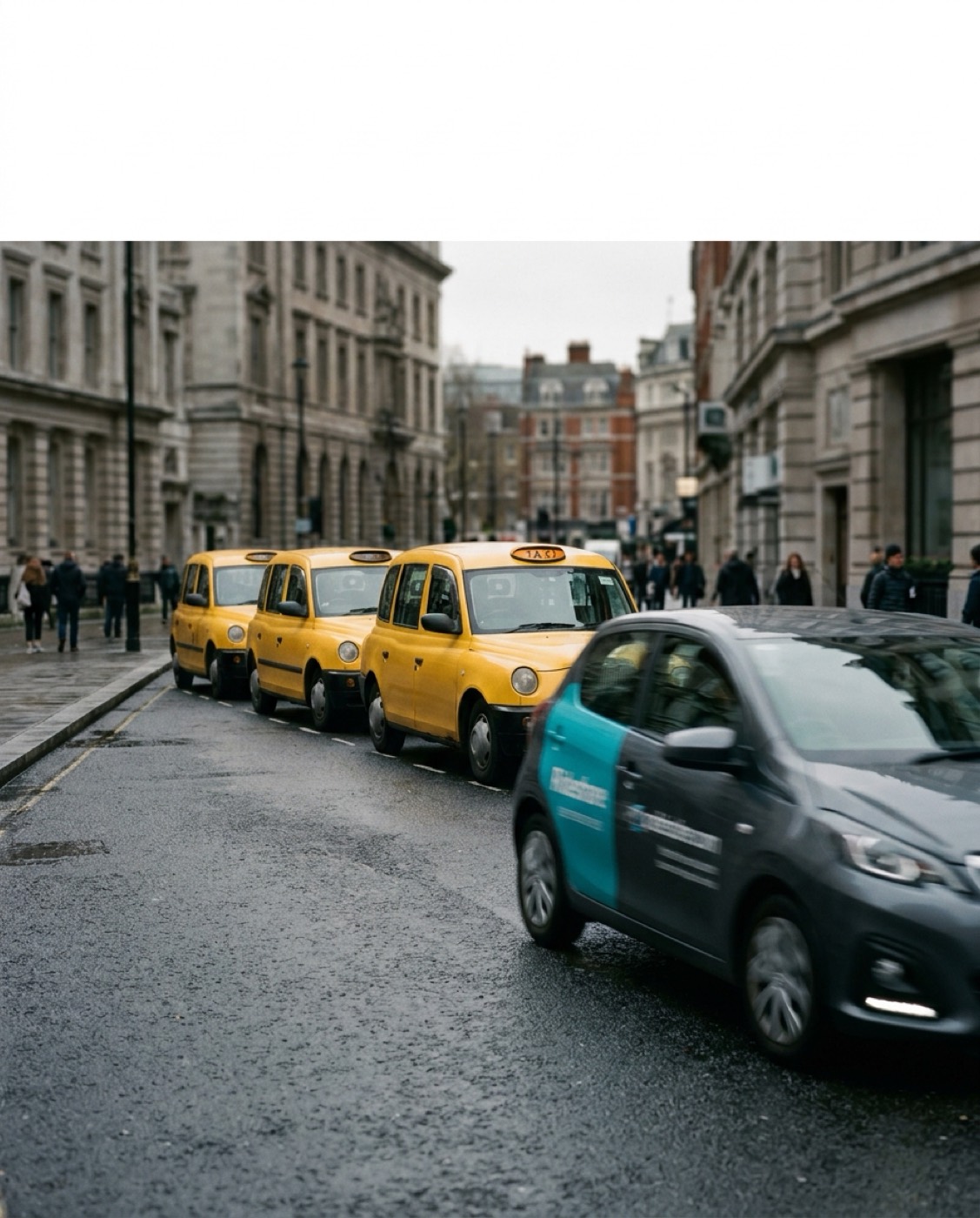
    A line of parked taxis on a wet street as a ride-share car passes them
    Shift 5 · The rank, and the car that passed itIllustrative photograph
    Shift 6 · May 2024 to now06

    People ask an AI instead of searching.

    The tipping point: on May 14, 2024 Google put AI Overviews in front of every US search.[34] In July 2026 OpenAI said ChatGPT reached one billion weekly users,[35] and Google said AI Mode passed one billion monthly users.[36]

    Adapting

    The businesses the AI names

    Of 1.9 million citations in local AI answers, Google Business Profiles were 28.6% and businesses' own websites were 42%.[37] Your profile and your website are what get you named.

    Waiting

    No household name has fallen yet

    And we will not invent one. What is measured is the traffic. When an AI summary appears, people click a result on 8% of visits instead of 15%.[38] Clicks to the number one result are down 58%.[39] 68% of US Google searches now end with no click to a website.[40]

    Time from launch to measured click loss: 10 to 14 months. Google says total organic click volume is "relatively stable" year over year.[41] Both can be true: the total holds while the clicks move to a shorter list.

    Is it really faster each time?

    Partly, and here is the honest version. The gap between 'the new channel arrives' and 'the incumbent's numbers break' shrank from about a decade (Borders, 2000→2011) to a few years (Blockbuster 6, Nokia 6, taxi medallions 3), and this time the click loss showed up inside a year (AI Overviews May 2024 → Pew March 2025). It is not a law. Some big names took a decade and died mostly of debt. But the window for adapting has never been shorter than it is now.

    You do not need to guess where you stand. Get your free score and see what the AI says about you today, or book a 20-minute call.

    Right now

    Eight numbers, with the sources.

    1billion

    OpenAI says ChatGPT reached one billion weekly users in July 2026, up from 100 million in November 2023.[35]

    1billion

    Google's AI Mode passed one billion monthly users in the second quarter of 2026,[36] and the Gemini app hit one billion monthly users in August.[42]

    49%

    49% of US adults have used an AI chatbot, and about four in ten use one to look things up.[43] In February 2024, 23% had used ChatGPT.[44]

    45%

    45% of consumers used an AI tool for a local business recommendation in 2026. A year earlier it was 6%.[1]

    2.5to 4.1

    Where Maps showed a list, ChatGPT names about four businesses, Google's AI Mode about three and a half, and AI Overviews two and a half. A tracked business appeared in 66% of Maps results but only 32% to 38% of AI answers.[45]

    8% vs 15%

    When Google shows an AI summary, people click a regular result on 8% of visits versus 15% without one, and click a link inside the summary on just 1%.[38]

    68%

    68% of US Google searches end without a click to a website, 231 clicks per 1,000 searches, up from 58.5% and 360 per 1,000 two years earlier.[40] [46]

    58% fewer

    Clicks to the number one ranked result are down 58% since AI Overviews arrived.[39]

    Now the other side, because you can check it Google says total search queries hit an all-time high in 2026 and that it sends billions of clicks to websites every week through AI features.[36] Google still handles 86% of US searches.[47] People did not stop searching. What fell is clicks per 1,000 searches, from 360 to 231.[46] [40]

    The answer now comes before the list. The list is shorter. And the AI names two to four businesses instead of ten links.

    Find out if you are one of the two to four. Get your free score.

    What we do

    From found to booked.

    We start with the score, fix what the AI reads, then build the parts that turn being found into being booked.

    Speed matters on the customer's side too. 75% of consumers choose a business in under 30 minutes, and 72% consider three or fewer.[48] Prices below are starting points. You get a fixed quote in writing on the call.

    Free AI Visibility Score

    Price$0

    A score from 0 to 100, a grade and your top three fixes. Plus what the AI actually said when we asked about you.

    Findable retainer

    Starting at$750 a month

    Monthly monitoring across ChatGPT, Gemini, Claude, Perplexity and Google AI Mode. Local SEO, fixes as they come up, and a monthly re-score so you watch the share move.

    Why it pays: a brand cited in Google's AI answer gets about 120% more clicks per impression than one that is not.[51]

    AI receptionist that books jobs

    Starting at$1,500 setup + $299 a month

    Answers every call, qualifies the job and books it on your calendar. Day and night, with your rules.

    Why it pays: the odds of qualifying a lead fall 21 times when the response slips from 5 minutes to 30.[52]

    A phone ringing with an incoming call on a cluttered workbench
    The call that comes in while you're on a job

    AI-ready website

    Starting at$3,500

    Built to be cited: clear business facts, service pages, structured data, reviews and speed. Typical builds run $3,500 to $7,500.

    Why it pays: business websites are 42% of what AI cites for local answers.[37]

    Whole front door

    Starting at$2,500 setup + $1,500 a month

    Site, retainer and receptionist together. One team owns how you get found and how you get booked.

    A smiling tradesman on the phone in front of his van
    Found, called, booked
    A city skyline at golden hour
    Every city in AmericaWhere we work

    Before you book

    Questions people ask before they book

    Calls run Monday to Saturday, 6 AM to 3 PM Pacific. Anywhere in the United States.

    Book a 20-minute call

    What is an AI Visibility Score?

    A 0 to 100 reading of how well an AI assistant can read, trust, and recommend your business. It tests whether crawlers can reach your site, whether the page states who you are and what you do, and whether the facts an AI needs (services, area, hours, reviews) are present and structured.

    Do you guarantee I will show up in ChatGPT?

    No one can guarantee what an AI answers. We fix the inputs the AI reads (your Google Business Profile, your website facts, your schema, your reviews) and re-score you before and after so you can see the change.

    How long does the Fix Sprint take?

    Seven days. You get a before score, the fixes, and an after score. The $297 is credited toward any larger engagement within 30 days.

    Which businesses is this for?

    Local service businesses anywhere in the United States: plumbing, HVAC, electrical, roofing, landscaping, dental, chiropractic, med spa, legal, and home services.

    When can we talk?

    Calls run Monday to Saturday, 6 AM to 3 PM Pacific. The calendar below shows only times that are still open.

    20 minutes, on the phone

    This week is filling. Pick a time that's still open.

    We call you at that time. No slide deck. We look at your score together and decide whether there is a fit. Times are Pacific.

    Checking the calendar.

    Pick a day, then a time. A short form opens here. Name and a phone number we can call, that's it.